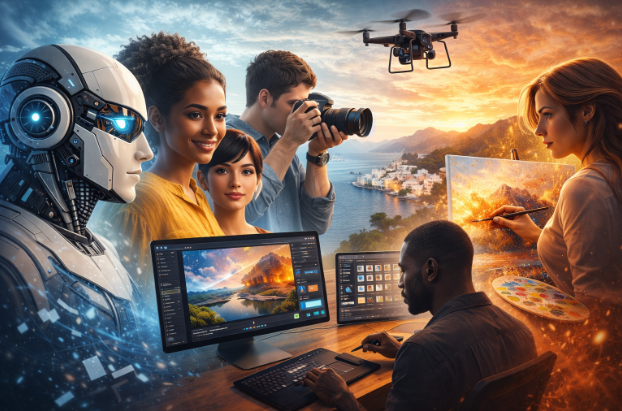

In the digital world, visual content has become the backbone of effective communication. Whether it’s for marketing, entertainment, or personal expression, visuals speak louder than words. With the advent of advanced tools powered by AI, anyone can now easily create stunning visuals—no matter their level of expertise. The new era of visual expression is being powered by a mix of AI-driven tools that allow creators to express themselves in ways previously reserved for professionals.
In this article, we’ll explore six cutting-edge tools that are changing the way we create, edit, and share visual content. From AI video apps to avatar generators, these platforms are designed to make high-quality visuals accessible to everyone, helping you bring your ideas to life quickly and efficiently.
1) Invideo
Invideo is leading the charge in the new era of visual expression with its AI-powered video creation platform. Known for its simplicity and flexibility, invideo allows users to create polished videos from scratch or transform text into dynamic, engaging video content. Whether you’re looking to create marketing videos, explainer videos, or social media content, invideo’s tools make it possible in just a few minutes, with no advanced skills required.
One of the standout features of invideo is its avatar generator, which allows users to create virtual characters that can speak and act in videos. These avatars can be fully customized, making them a perfect solution for businesses looking to create personalized video content or marketers who want to add a unique touch to their brand.
In addition to its avatar generator, invideo also offers a versatile ai video app, making video creation even easier for creators on the go. With its easy-to-navigate interface, professional-quality results, and extensive library of templates, invideo has become the go-to platform for creators who need to produce videos quickly and efficiently, without the hassle of traditional video editing.
2. Synthesia: Avatar-Led Storytelling
Synthesia excels in avatar-driven videos, allowing users to create personalized talking-head content without cameras or actors. Input a script, select from hundreds of AI avatars—or generate custom ones—and watch as the platform animates lifelike expressions, gestures, and multilingual delivery. This avatar feature shines for training modules, product demos, or customer explainers, making complex info accessible and engaging.
The tool’s strength lies in its customization depth, from clothing and backgrounds to voice cloning that matches regional accents perfectly. Integration with editing suites and APIs enables seamless scaling for enterprises, while template libraries speed up repetitive tasks. Creators leverage Synthesia to humanize faceless videos, boosting viewer retention through relatable digital hosts that feel authentically present.
3. HeyGen: Dynamic Avatar Interactions
HeyGen brings avatars to life with interactive flair, powering videos where digital characters respond conversationally to prompts or viewer inputs. Its avatar generator crafts hyper-realistic figures from photos or descriptions, complete with emotional nuances like smiles or nods for immersive storytelling. This is transformative for personalized marketing, virtual events, or e-learning, where one-to-one feel drives deeper connections.
Beyond basics, HeyGen offers motion capture for custom animations and real-time translation, dubbing avatars in 40+ languages without losing intonation. Collaborative features let teams co-edit scenes, while export options suit every platform from LinkedIn to Instagram. For content creators, it unlocks scalable personalization, turning static visuals into dynamic experiences that elevate brand loyalty.
4. Runway AI: Generative Motion Magic
Runway AI pushes boundaries with text-to-video generation, creating fluid animations and scenes from simple descriptions. Users prompt for styles like “dreamy forest chase,” and the AI delivers cinematic clips with precise control over camera angles, lighting, and pacing. While not avatar-focused, it complements them by generating backgrounds or effects that enhance digital characters seamlessly.
Its editing suite includes inpainting for object removal/addition and style transfer for artistic twists, making it a favorite for filmmakers experimenting with surreal visuals. Multi-model support allows blending outputs, while high-res upscaling ensures broadcast quality. Visual storytellers use Runway to prototype ideas rapidly, fueling innovative content that stands out in crowded feeds.
5. Leonardo.ai: Image-to-Avatar Canvas
Leonardo.ai thrives as a creative hub for images and animations, with a robust avatar generator that builds consistent characters from text or reference photos. Fine-tune traits like age, ethnicity, or attire, then animate them into shorts or loops—perfect for game assets, social avatars, or storyboards. This feature empowers faceless creators to maintain visual continuity across projects effortlessly.
The platform’s alchemy refiner iterates designs for perfection, while motion tools add walks, talks, or environments. Custom model training on datasets yields unique styles, avoiding generic outputs. Marketers and artists harness Leonardo.ai for branded visuals, from profile pics to animated ads, blending speed with artistic depth for viral potential.
6. Midjourney: Artistic Visual Forge
Midjourney ignites imagination through Discord prompts, generating intricate artwork that evolves with community feedback. Describe “ethereal avatar in neon cyberworld,” and it produces variations with masterful composition and detail. Though primarily image-based, its character reference (–cref) parameter ensures consistent avatars across renders, vital for series or campaigns.
Remix modes blend user images with AI magic, expanding to panoramas or videos via upscalers. Style weights and aspect controls tailor outputs for thumbnails, posters, or NFTs. Content creators rely on Midjourney to evoke emotions instantly, crafting visuals that amplify narratives and drive shares in the visual-first digital age.
Avatar Features Revolutionizing Creation
Avatar generators in tools like invideo, Synthesia, HeyGen, and Leonardo.ai are game-changers, enabling lifelike digital representatives without production crews. These features support diversity in appearances and voices, fostering inclusive storytelling for global audiences. They integrate with video pipelines, reducing costs while scaling personalization—key for SEO-driven content that ranks high on visual search.
Ethical AI practices, such as consent-based cloning and watermarking, build trust. Paired with motion tools from Runway or Midjourney, avatars gain richer contexts, creating hybrid workflows where humans guide AI for authentic results.
Integration Tips for Maximum Impact
Combine these tools for powerhouse pipelines: Generate avatars in HeyGen, animate with Runway, and edit in invideo for end-to-end efficiency. APIs and Zapier hooks automate transfers, while cloud collaboration keeps teams synced. Focus on prompt engineering—specificity yields better results—and A/B test visuals for engagement metrics.
Analytics within platforms track performance, informing iterative improvements. For SEO, optimize with alt text, fast loads, and mobile-first designs to dominate search results.
Conclusion
These six tools—invideo, Synthesia, HeyGen, Runway AI, Leonardo.ai, and Midjourney—are fueling a visual expression renaissance, with avatar features leading the charge in personalized, scalable content. They empower creators to transcend limitations, blending AI efficiency with human creativity for standout results. Dive in, experiment boldly, and watch your visual stories captivate and convert in this vibrant new era.