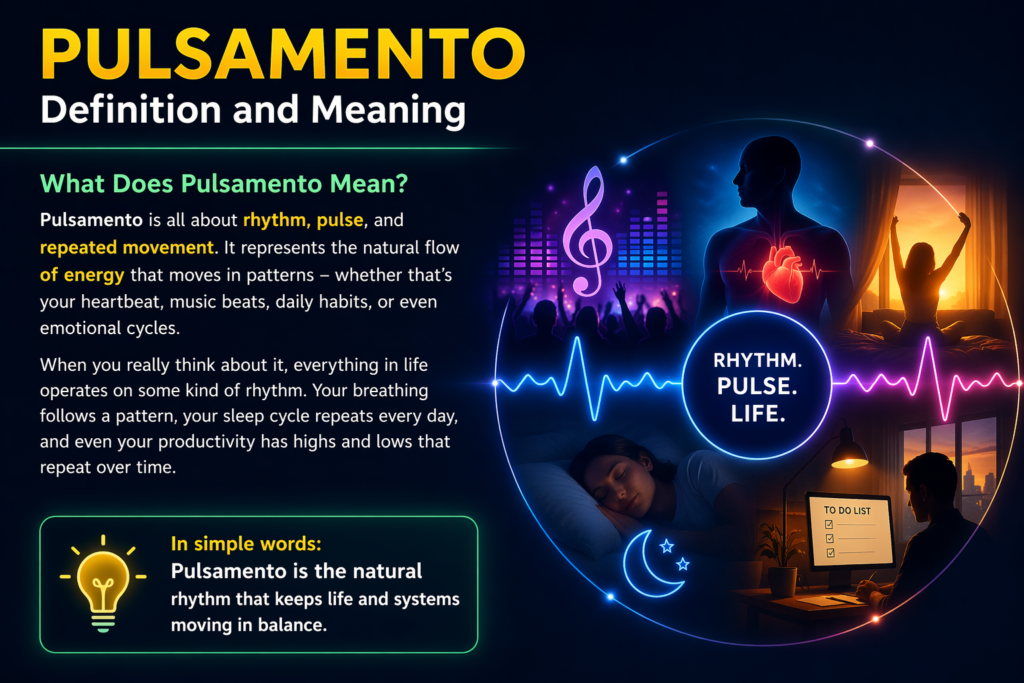

What is Pulsamento?
Pulsamento is a term that encapsulates the rhythm and continuity inherent in various aspects of life and nature. Originating from the Latin word “pulsare,” which means to beat or pulse, it signifies a fundamental rhythm that manifests in different forms across disciplines such as psychology, music, and the natural world. In essence, pulsamento can be viewed as the heartbeat of existence, representing the cyclical patterns that define our experiences.
In the realm of psychology, pulsamento may describe the rhythmic patterns of human emotions and behaviors. Just as a heartbeat is central to physical life, emotional oscillations convey the complexities of our mental state. This rhythmic quality illustrates how feelings ebb and flow, contributing to our overall psychological well-being. Understanding pulsamento in this context can aid professionals in recognizing the patterns that underlie human emotions, enabling more effective therapeutic approaches.
The concept is equally significant in the world of music, where pulsamento serves as a foundational element in musical composition. It represents the regular beat that guides both performers and listeners, creating an immersive experience that is both driving and soothing. Musicians often manipulate pulsamento to evoke emotions and set the mood, showcasing how rhythm can deeply connect individuals through shared experiences.
Moreover, pulsamento can be found in nature, manifesting in the cyclical changes of seasons, the rhythm of tides, and the life cycles of organisms. These natural phenomena reveal a continuous pulse that signifies the interconnectedness of all life forms, reinforcing the importance of harmony within ecosystems. By exploring pulsamento across these diverse fields, one begins to appreciate its profound implications for understanding continuity, rhythm, and the essence of life itself.
The Role of Pulsamento in Nature and Culture
Pulsamento is a fundamental concept that transcends disciplines, manifesting not only in the natural world but also in cultural expressions. In nature, pulsamento can be observed through the rhythmic cycles of life, such as the changing tides and the progression of seasons. The ebb and flow of ocean tides exemplify this concept, as their movements are dictated by gravitational forces exerted by the moon and sun, creating a natural rhythm that marks time and life along coastal ecosystems. Similarly, the cyclic nature of seasons – spring’s renewal, summer’s growth, autumn’s harvesting, and winter’s rest – showcases pulsamento in its purest form, reflecting a dynamic interplay that underscores ecological balance.
In human cultures, pulsamento finds expression in various art forms, particularly in music and dance. The rhythmic beats of drums can evoke strong emotional responses, keeping both the performer and audience in sync with the pulsating energy of the moment. Different cultures incorporate pulsamento into traditional music, where specific rhythms contribute to communal identity and shared experiences. Dance, too, serves as a physical manifestation of pulsamento, as participants embody the rhythms of their environment, celebrating life’s flow through coordinated movements that resonate with their surroundings.
Moreover, the notion of pulsamento extends into religious and spiritual practices across cultures. Rituals often align with natural cycles, such as solstices or equinoxes, highlighting humanity’s deep-seated connection with the earth’s rhythms. Festivals celebrating agricultural cycles often incorporate traditional music and dance, emphasizing the integral role pulsamento plays in fostering community ties and cultural heritage. This rhythmic pulse of life, encompassing both nature and culture, reiterates the interdependence of humanity and the environment.
Pulsamento in Psychology: Impact on Well-being
Pulsamento, a term that signifies rhythmic pulsation, extends beyond mere physiological phenomena; it encapsulates profound implications in the realm of psychology. The concept of pulsamento resonates deeply with how human beings experience life, influencing various aspects of mental health and emotional well-being. Psychological theories increasingly underscore the importance of rhythms—those biological and external patterns that denote stability and predictability in human experiences.
The practice of mindfulness, which encourages individuals to achieve a heightened state of awareness, frequently integrates the idea of pulsamento. Many therapeutic approaches utilize rhythmic elements, such as breathing techniques and sound therapy, to foster relaxation and emotional healing. By attuning oneself to the inner pulsation, individuals may enhance their capacity to manage stress, anxiety, and depression. This connection emphasizes how personal rhythms can stabilize mental states and lead to a more balanced emotional life.
Further explorations into the impact of pulsamento reveal its relevance in community and social psychology. Shared rhythms, such as communal activities or synchronized movements, play an essential role in building social cohesion and fostering a sense of belonging. These patterns of interaction align with psychological principles that position social support as a critical factor in well-being.
Moreover, research has demonstrated that exposure to rhythmic stimuli, such as music or nature sounds, can yield therapeutic benefits, both emotionally and cognitively. This underscores the multidimensional nature of pulsamento, serving as a bridge between individual experiences and collective well-being. The implications for therapy are profound: integrating pulsamento into psychological practices offers avenues for enhanced mindfulness and emotional health.
Harnessing the Power of Pulsamento in Everyday Life
Pulsamento is an intrinsic quality of life, manifesting in various forms that can significantly impact our daily experiences. By understanding and embracing the principles of pulsamento, individuals can cultivate personal rhythms that enhance their well-being. One practical approach to incorporating pulsamento into daily routines is by establishing consistent patterns for activities such as waking, eating, and exercising. Establishing a daily schedule that aligns with one’s natural energy peaks can foster a sense of harmony and balance.
Engaging in rhythmic activities also allows individuals to tap into the essence of pulsamento. Activities such as dancing, drumming, or even walking can create a connection to the rhythm of life. These activities not only promote physical health but also encourage mental clarity and emotional stability. Moreover, when performed with awareness, they can deepen one’s connection to the pulsating flow of existence, fostering mindfulness and presence.
Awareness of the pulsamento in the environment can further enhance this connection. Taking time to appreciate the natural rhythms around us—such as the change of seasons, the cycle of day and night, and even the subtle heartbeat of nature—can enrich our lives. This awareness can be developed through simple practices like spending time outdoors, engaging in meditation, or practicing gratitude for the life surrounding us. By acknowledging these cycles, individuals can cultivate a deeper appreciation for the interconnectedness of all life forms.
In essence, integrating the concepts of pulsamento into daily life not only promotes a harmonious existence but also nurtures a more profound connection with oneself and the world. By adopting these practices, individuals can harness the inherent power of pulsamento, leading to a more fulfilling and enriched life experience.