
Understanding the Basics of Curling: How It Works
Curling is a sport that blends precision, strategy, and teamwork, played on a rectangular sheet of ice. This sport involves the sliding of heavy, polished granite stones toward a target area, which is known as the ‘house.’ The overarching aim of curling is to accumulate points by having one’s stones closest to the center of the house. To achieve this, players must understand the delicate interplay of various factors that influence a stone’s trajectory.
The mechanics of curling begin with the delivery of the stones. Players, referred to as curlers, slide these stones down the ice, initiating their path towards the target. The starting motion is critical; the angle, speed, and rotation of the stone all contribute to its final trajectory. Once the stone is released, its path is influenced by several surface conditions, primarily the pebble—the small droplets of water frozen on the ice surface. This pebble affects the stone’s momentum and how it interacts with the ice.
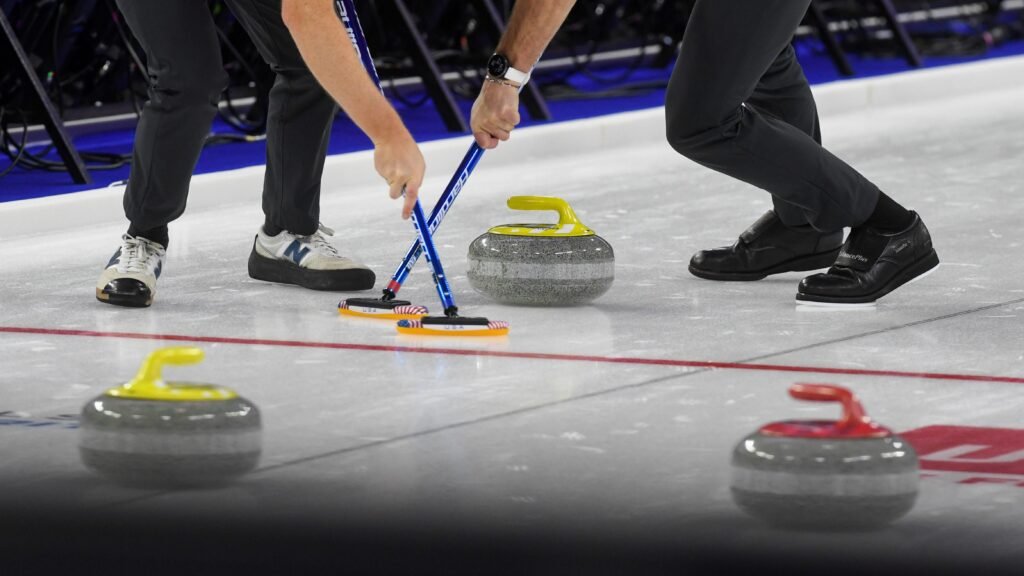
Brushers, or sweepers, play a pivotal role in manipulating the stone’s course after it has been delivered. As they sweep ahead of the stone, they reduce friction between the stone and the ice, effectively smoothing its path. A fundamental question arises within the sport regarding whether brushes affect the stone’s path in Olympic curling. Indeed, the strategic use of sweeping can alter the distance that a stone travels and its final position in the house. The extent to which brushing impacts the stone’s path becomes crucial as teams compete, highlighting the importance of coordination and timing among the players.
Understanding these fundamental components of curling, from stone delivery to the interaction of brushes with the surface, provides essential context for later discussions on how these factors intertwine to affect game outcomes.
The Science of Brushing: How It Changes the Ice Surface
The technique of brushing in curling is an essential component that impacts the stone’s path significantly. When players use brushes on the ice, they create friction that alters the surface texture. This alteration is not just superficial; it has physical ramifications that affect the overall trajectory of the curling stone. Specifically, brushing causes a temporary melting of the ice surface due to the heat generated from the brushing action. This melted layer reduces the friction on the stone, allowing it to travel further than it would without brushing.
Research in sports science suggests that the distance a stone can glide is significantly enhanced by effective brushing techniques. When players sweep the ice, they can transform it into a slightly lubricated surface, which allows the stone to maintain its speed for a longer duration. More importantly, this action also impacts the degree to which the stone curls. The brush modifications create micro-level changes on the ice, which can influence how the stone interacts with the surface, leading to greater control over its path during play.
Experts in the field of curling often discuss the critical role of brush material and design in achieving optimal performance. For instance, synthetic brushes with finer bristles can produce a different brushing effect compared to traditional brushes, influencing the amount of distance and curl that can be manipulated. Studies, including ones conducted by curling federations, indicate that skilled players can consistently adjust their brushing to either maximize their stone’s range or influence its directional movement, thereby enhancing team strategy.
In conclusion, brushing significantly affects the stone’s path in Olympic curling by changing the ice surface and managing friction levels. This scientific understanding underscores the importance of brushing within the sport and highlights its role in strategic gameplay.
Impact of Brush Types and Techniques on Stone Movement
The type of brushes utilized in curling plays a critical role in determining how effectively players can control the stone’s path. Dedicated curling brushes, often designed specifically for high-level competition, differentiate themselves from generic brushes in several key aspects, which can greatly influence performance during a match. These brushes typically feature specialized bristle materials that enhance friction and allow for better contact with the curling stone.
The bristle material is significant; for instance, brushes with finer, denser bristles tend to create increased drag on the stone’s surface, which affects its speed and trajectory. Furthermore, the stiffness of the brush can also impact stone movement. Stiffer bristles may be less effective in absorbing energy when in contact with the stone, leading to a different brushing technique aimed at maximizing momentum. Conversely, softer bristles offer a cushioning effect, enabling players to exert more control over the stone’s directional path.
Weight distribution in brushes also influences performance, as curlers must harness particular techniques to optimize their brush use. More substantial brushes can offer additional stability, allowing curlers to engage in vigorous or subtle brushing, depending on the game situation. Insights from professional curlers suggest that technique variations—ranging from the intensity and angle of brushing to the timing and coordination with teammates—play an equally important role in directing the stone’s journey. Employing effective techniques not only maximizes the benefits of the brush types used but also enhances the overall strategy during play.
In conclusion, understanding how brushes affect the stone’s path in Olympic curling involves a detailed look at both the tools themselves and the techniques employed by players. By selecting the appropriate brush and mastering brushing techniques, curlers can significantly influence their competitive performance on the ice.
Real-World Examples and Analysis: Case Studies in Olympic Curling
Throughout the history of Olympic curling, various instances highlight the critical role that brushing strategies have played in influencing the stone’s path. One notable example comes from the 2002 Salt Lake City Winter Olympics, where the Canadian team faced the Norwegian team in a semifinal match. In a pivotal tenth end, Canada’s skip opted to increase the intensity of brushing when delivering the final stone. This decision ultimately led to an adjustment in the stone’s trajectory, allowing them to secure a crucial point that propelled them to victory.
Another compelling illustration is found in the 2010 Vancouver Winter Olympics. In the gold medal match between Canada and Sweden, the Canadian team employed a unique brushing technique known as “soft brushing.” This approach was aimed not only at improving the stone’s speed but also at managing its curling path. Observers noted that the careful balance of brush pressure allowed them to make real-time adjustments, significantly impacting the stone’s path as it approached the house.
Further analysis of the 2018 PyeongChang Olympics reveals similar themes. During a dramatic encounter between South Korea and Sweden, tactical discussions during the early ends emphasized the use of brushes to maintain optimal speed. The South Korean team emphasized how brushing affected the final approach, allowing for precise placements that shifted the scoring opportunities in their favor. This case underlines the tactical importance of decision-making regarding brushing in terms of strategy.
These examples illustrate that the choice to brush or not brush a stone is more than a matter of physical exertion; it is a strategic decision with potentially game-changing repercussions. In the highly competitive environment of Olympic curling, understanding this dynamic becomes essential for both players and fans, as it reveals the nuanced interplay between technique and strategy.