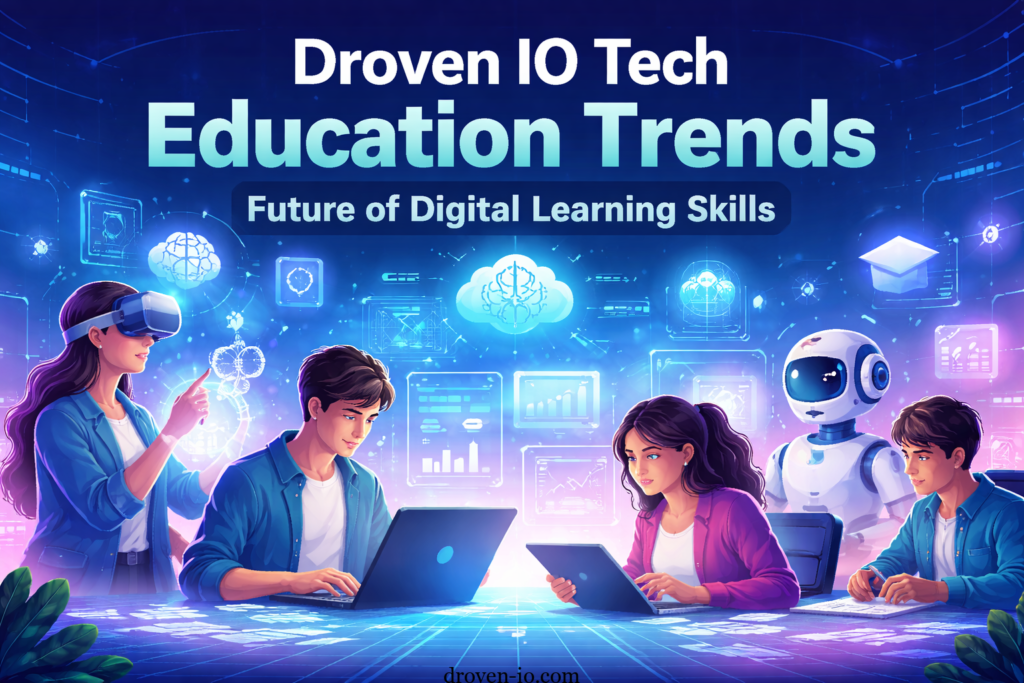

Understanding Droven IO Tech Education Trends
In recent years, the landscape of education has undergone a significant transformation driven by advancements in technology. The concept of droven io tech education trends refers to the innovative practices and emerging technologies that are reshaping how educators deliver content and engage learners. These trends encompass a wide range of developments, including the integration of artificial intelligence, virtual reality, and personalized learning experiences.
One prominent aspect of these trends is the increasing use of learning management systems (LMS) that facilitate online education and provide analytics for tracking student progress. Institutions are leveraging LMS platforms to offer customized courses that meet the individual needs of learners, thereby promoting a more inclusive approach to education. Furthermore, the rise of hybrid learning environments, where traditional classroom settings are combined with online components, exemplifies how educational institutions are adapting to new technological capabilities.
Emerging educational technologies, such as augmented reality (AR) and gamification, are also playing a pivotal role in engaging students and enhancing the learning process. These technologies allow educators to create interactive and immersive experiences that make learning more enjoyable and effective. By utilizing simulations and game-based learning, educators can foster critical thinking and problem-solving skills among their students, which are essential in today’s complex world.
Pedagogical shifts are equally crucial to the understanding of droven io tech education trends. Educators are increasingly moving towards student-centered learning frameworks that prioritize collaboration and active participation. This transition reflects a broader recognition that learners are more motivated and effective when they actively engage with the material and collaborate with their peers. Overall, the innovative practices emerging from these trends not only enhance the educational experience but also prepare students for the demands of the 21st-century workforce.
Key Trends in Tech Education by Droven IO
The landscape of technology education is undergoing transformative changes, and Droven IO has identified several key trends that are shaping the way educators and students engage with learning. One prominent trend is the rise of online and hybrid learning models. With the advent of high-speed internet and advanced digital tools, educational institutions are increasingly adopting these flexible learning approaches. Students can benefit from asynchronous courses that accommodate diverse schedules, allowing for greater access to a quality education.
Another notable trend is the incorporation of artificial intelligence (AI) and machine learning into educational curricula. These technologies are revolutionizing how content is delivered and personalized. By leveraging data analytics, educators can track students’ progress and tailor learning experiences that cater to individual needs and strengths, thereby fostering a more effective learning environment. This integration of technology equips students with the essential skills required in a data-driven economy.
Additionally, gamification is emerging as a significant technique to enhance engagement and motivation in educational settings. By integrating game elements into learning experiences, educators can create interactive environments that not only make learning enjoyable but also encourage critical thinking and problem-solving skills. This approach can lead to improved retention of information and a deeper understanding of complex concepts.
Furthermore, personalized learning experiences are increasingly becoming a staple of modern education. Droven IO emphasizes the importance of customization in curricula, allowing students to progress at their own pace while ensuring they grasp fundamental concepts before moving forward. This focus on individualized learning paths empowers students and fosters a sense of ownership over their educational journey, ultimately leading to better outcomes.
Overall, these key trends, identified by Droven IO, reflect a significant shift in the tech education landscape, aiming to enhance learning experiences and prepare students for future challenges in an increasingly digital world.
Case Studies: Success Stories in Implementing Droven IO Tech Education Trends
In recent years, multiple educational institutions have embraced droven io tech education trends, showcasing innovative approaches to enhance learning and student engagement. A notable example can be found at the University of California, Davis (UC Davis), renowned for its commitment to embracing technology in education. UC Davis implemented a comprehensive online learning platform that utilized augmented reality (AR) tools to deliver immersive science courses. This initiative overcame initial resistance from faculty by providing training and support to enhance their teaching methodologies. The outcome was a 30% increase in student assessment scores, underscoring the effectiveness of incorporating cutting-edge technology into traditional learning models.
Another compelling case study is the coding boot camp initiated by the non-profit organization, TechBridge, which targets underserved communities. By adopting the latest droven io tech education trends, TechBridge successfully integrated gamified learning resources and virtual collaboration tools into their curriculum. Despite facing logistical hurdles, such as limited access to high-speed internet, the organization focused on harnessing mobile technology solutions to connect learners with instructors. As a result, they reported a doubling of student enrollment in their programs and a significant 70% job placement rate post-graduation, illustrating the positive impact of technology-driven education.
The challenges faced by these organizations serve as essential learning experiences. In both instances, addressing infrastructure limitations and securing faculty buy-in proved crucial for overcoming resistance to new methodologies. Moreover, continuous feedback from students allowed for iterative improvements in curriculum design and execution. Ultimately, these case studies affirm that institutions willing to adopt and adapt droven io tech education trends can successfully enhance their educational offerings, leading to improved outcomes for students and educators alike.
The Future of Tech Education: Predictions and Recommendations
The landscape of tech education is poised for significant transformation as we advance further into the 21st century. The droven io tech education trends indicate that a shift towards a more personalized and adaptive approach to learning will be paramount. With the increasing integration of artificial intelligence and machine learning, educational programs are expected to become more tailored to individual learner needs, allowing for an enhanced engagement with technological concepts.
Moreover, emerging technologies such as virtual reality (VR) and augmented reality (AR) are likely to play a vital role in how educational content is delivered. These technologies offer immersive experiences that can simulate real-world scenarios, thereby helping students grasp complex technical skills more effectively. As institutions begin to adopt these tools, it will be crucial for educators to undergo training that equips them with the necessary skills to utilize these innovations in their teaching methodologies.
In addition to technological advancements, collaboration between industry and educational institutions is expected to increase. This partnership could facilitate the development of curriculum that is aligned with current market needs, ensuring that students graduate with relevant and applicable skill sets. For policymakers, advocating for policies that encourage such collaborations will be key to improving tech education. Furthermore, fostering environments that support continuous learning and professional development for educators will be vital in maintaining the relevance of teaching practices.
Ultimately, embracing the droven io tech education trends requires a proactive approach from educators, institutions, and policymakers alike. By staying ahead of emerging technologies and methodologies, they can construct a tech education framework that not only meets the needs of current learners but also prepares future generations for the rapidly changing technological landscape.